
Mortar Colour Variation, Part 2: Who Pays, and How a Mortar Test Should Be Used

Updated: Nov 2
In Part 1, I wrote about why mortar can change colour partway up a wall, and how to fix it. When it happens, the next question is usually who pays for the repair. Here is how that tends to play out, and how I think it should be approached.
The issue
Sand suppliers usually say this up front, on their website or in their product sheets: sand is a natural product, it can vary in several ways, and they do not accept responsibility for that variation. As a result, the responsibility often ends up with whoever ordered the sand.
When the builder has supplied the sand without knowing this, it can seem natural to see it as the bricklayers' fault, because they mixed the mortar. The bricklayers, for their part, often have no idea why the colour changed. In my experience, these two views clash very often, and the repair is finished without anyone being sure why it happened, or how it could have been managed. That is a large part of why I wanted to write this down.
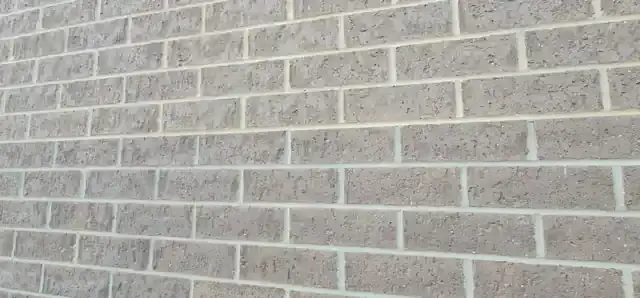
Up close, the mortar changes colour from one course to the next. This was also one of our own Artvision jobs.
The solution
If the dispute becomes serious, or the amount is large, a mortar test may be ordered to analyse what the mortar is made of. It is natural for the results to be read first as a question of how the mortar was mixed. In my view, though, the test is most useful when it is used to find the cause. If the same results show that the difference came from the size of the sand particles, and so from a difference in curing time, both parties can understand why it happened, and the cost of the repair can be shared fairly.
The results can point either way. If the sand particles differ, that points to the sand. If the cement ratio or the water is off, that points to the mixing. Whichever way they point, I think the test should be used to find the cause, not only to place the blame.
This is not legal advice, and every job is different. These are, of course, only my own views. If you see things differently, I would like to hear from you.
artvisionbrickwork@gmail.com · Artvision Brickwork


Comments